From the blog
420% of the Vitamin D Daily Value: What 84 mcg Really Is
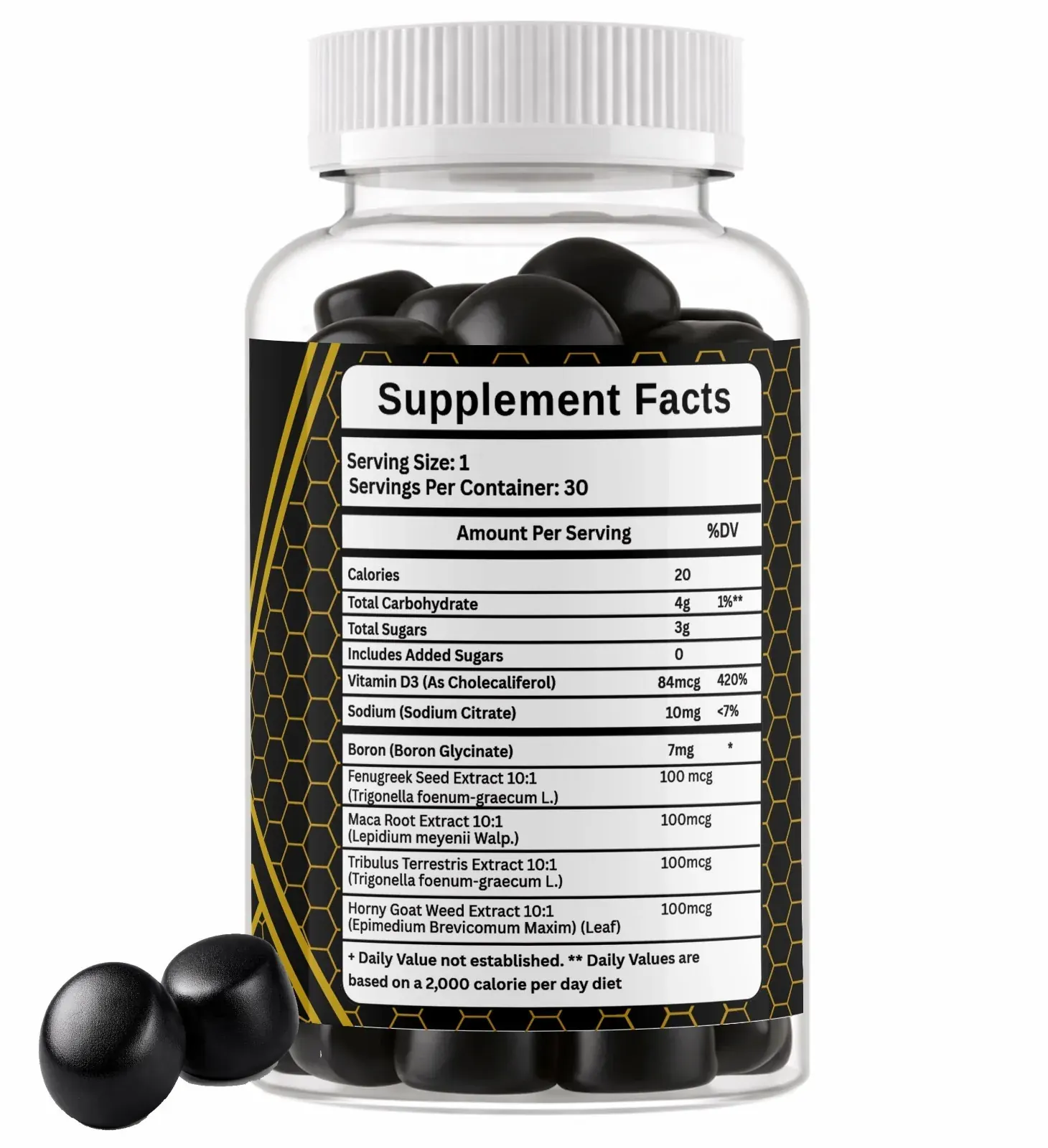
84 micrograms of vitamin D3 is 3,360 IU. The Daily Value on labels is 20 mcg (800 IU), so one gummy is 420% of it. The adult tolerable upper intake level is 100 mcg (4,000 IU) a day from all sources, so a single gummy uses 84% of that allowance. On its own that is within the limit; alongside another vitamin D supplement it may not be.
The number, in three units
Vitamin D is the supplement most likely to confuse people, because it is quoted in two different units and the conversion is not obvious. Here is the same amount three ways.
84 micrograms. 3,360 international units. 420% of the Daily Value. All three describe one gummy.
The conversion is 1 microgram = 40 IU. Older labels used IU almost exclusively; current US labels are required to lead with micrograms, which is why the same product can look ten times smaller than the one you remember buying.
| Amount | In mcg | In IU | % of Daily Value |
|---|---|---|---|
| Daily Value on labels | 20 mcg | 800 IU | 100% |
| A typical multivitamin | 10–25 mcg | 400–1,000 IU | 50–125% |
| A common standalone capsule | 25–50 mcg | 1,000–2,000 IU | 125–250% |
| One HoneyFil gummy | 84 mcg | 3,360 IU | 420% |
| Adult tolerable upper limit | 100 mcg | 4,000 IU | 500% |
| A common high-dose weekly capsule | 1,250 mcg | 50,000 IU | Prescribed, not bought |
Where the ceiling is, and why it exists
The tolerable upper intake level for adults is 100 micrograms — 4,000 IU — a day from all sources combined. That is not the point at which harm begins; it is the point above which routine daily intake has not been established as safe for everyone, which is a different and more conservative thing (NIH Office of Dietary Supplements, “Vitamin D: Fact Sheet for Health Professionals”).
Vitamin D is fat-soluble. Unlike vitamin C, it is stored rather than excreted, so an excess accumulates over weeks and months rather than being flushed out daily. That is the whole reason a ceiling exists.
What too much eventually does is raise blood calcium. The symptoms are nausea, vomiting, weakness, confusion, excessive thirst and frequent urination, and over time kidney damage. Genuine toxicity is uncommon and almost always follows very high doses taken for a long period, often by mistake or from a mislabelled product.
So is 84 mcg in one gummy a problem?
Taken alone by a healthy adult: no. It is below the upper limit, it is a dose doctors prescribe routinely to correct a deficiency, and low vitamin D is genuinely common.
The complication is that 84 mcg uses 84% of the daily allowance before anything else. Most people do not take vitamin D once; they take it in a multivitamin, in a fortified drink, in a protein powder and sometimes in a separate capsule they forgot about.
| If you also take… | Typical amount | Running total with one gummy | Against the 100 mcg limit |
|---|---|---|---|
| Nothing else | — | 84 mcg | Within |
| A fortified cereal or drink | 2–5 mcg | 86–89 mcg | Within |
| A multivitamin | 10–25 mcg | 94–109 mcg | At or over |
| A separate D3 capsule (1,000 IU) | 25 mcg | 109 mcg | Over |
| A separate D3 capsule (5,000 IU) | 125 mcg | 209 mcg | Well over |
When a high dose is the right call
None of this is an argument that vitamin D is dangerous or that 84 mcg is an irresponsible amount. Deficiency is common and correcting it matters.
The people most likely to be low are the ones who get little sun on their skin: people who work indoors, people in northern latitudes in winter, older adults, people with darker skin, people who cover up, and people who are obese, because vitamin D distributes into fat tissue.
For those people a dose in this range for a period is entirely ordinary, and doctors prescribe far larger ones for short courses. The difference between that and a gummy is that a doctor measured something first.
Get the blood test
It is cheap, common, and it turns a guess into a number.
Correct the deficiency if there is one
At a dose and duration your clinician picks.
Then maintain
Maintenance is usually a smaller daily amount than the correction dose.
Re-test
Rather than assuming it stayed fixed.
Count everything
Including the gummy, the multivitamin and the fortified milk.
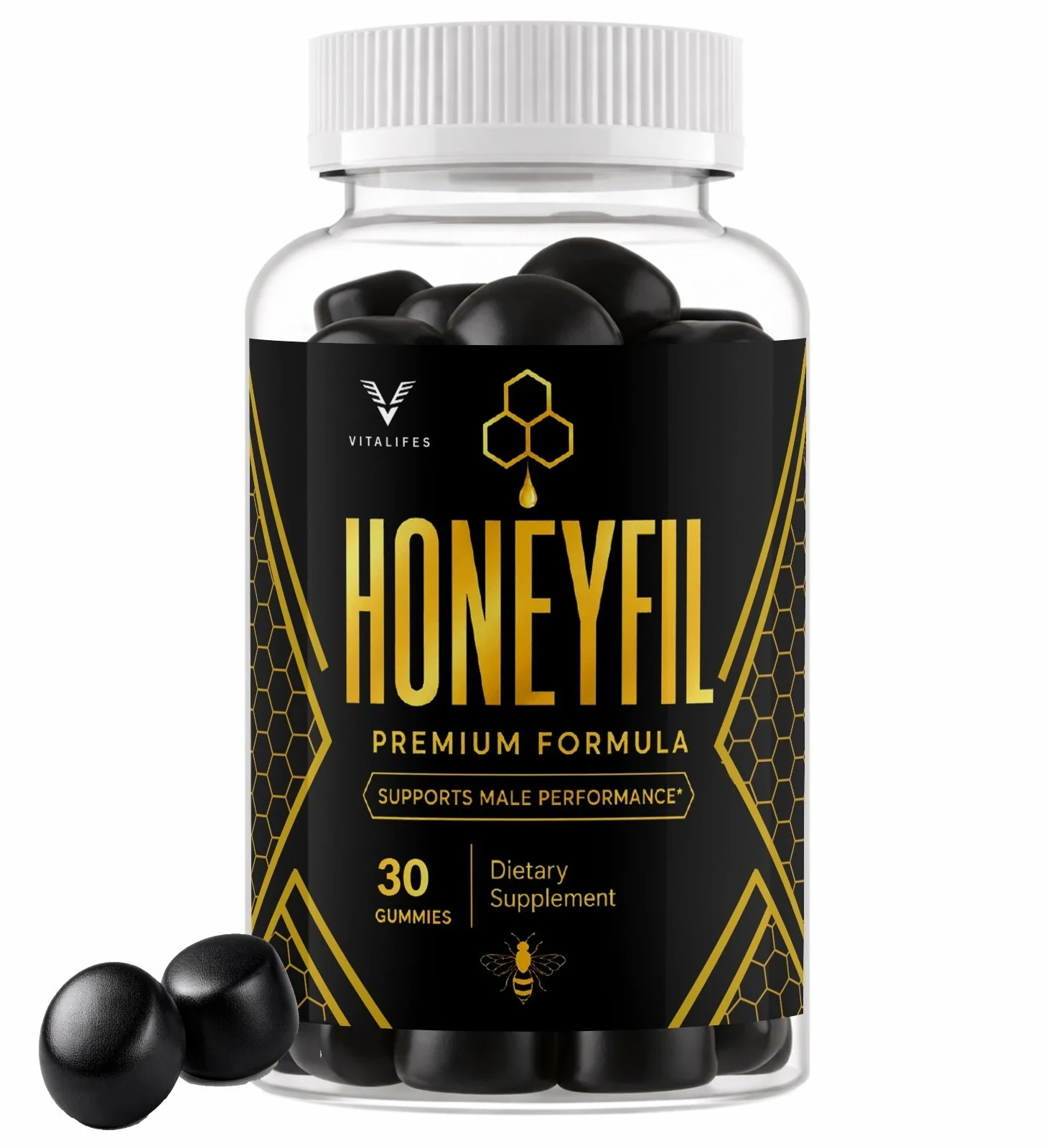
See the whole HoneyFil panel, with every amount.
Check today’s priceWhy is it in a male performance product at all?
This is a fair question, and the honest answer is that there is a real thread and it is thinner than the marketing suggests.
Observational studies have found that men with low vitamin D tend to have lower testosterone than men with normal levels. That association is reasonably consistent. What is much less consistent is the trial evidence: giving vitamin D to men who are not deficient does not reliably raise testosterone, and several trials have found nothing.
So the fair version is: if you are deficient, correcting it may help several things including how you feel, and possibly hormone levels. If you are not deficient, adding 3,360 IU a day is unlikely to do anything for performance and takes up most of your upper limit. Which of those describes you is a blood test, not a guess (NIH Office of Dietary Supplements, “Vitamin D: Fact Sheet for Health Professionals”).
The label question this raises
One more thing worth noting, since this is a site about reading labels. The HoneyFil panel prints vitamin D3 at 84 mcg with a %DV of 420%. Both figures are internally consistent, and the arithmetic checks out.
That is not true of every line on this panel. The sodium row prints 10 mg with a %DV of “<7%”, when 10 mg is under 1% of the 2,300 mg Daily Value. It is technically true and oddly imprecise, and it is the kind of thing that makes a careful reader check the other rows.
The rows worth checking most are the ones with real amounts, and on this label that means vitamin D and boron. Both of those check out. The four botanicals check out too, in the sense that the numbers are accurate — they are simply very small (U.S. Food and Drug Administration, “Dietary Supplements: What You Need to Know”).
The bottom line
84 micrograms of vitamin D3 is 3,360 IU, or 420% of the Daily Value, and 84% of the adult upper limit of 100 mcg a day from all sources.
Taken on its own by an adult who is not already supplementing, that is a reasonable and often useful dose. Taken alongside a multivitamin or another D capsule, it can put you over the limit without you noticing, because vitamin D accumulates. Add up your labels once, and this stops being a question.
Sources
- NIH Office of Dietary Supplements. Vitamin D: Fact Sheet for Health Professionals. NIH ODS, current revision. Checked September 24, 2026.
- U.S. Food and Drug Administration. Dietary Supplements: What You Need to Know. FDA, current revision. Checked September 24, 2026.
Questions on this topic
More answers on the full FAQ page.
How many IU is 84 mcg of vitamin D?
3,360 IU. The conversion is 1 microgram to 40 IU.
Is 4,000 IU a day too much?
It is the adult tolerable upper intake level from all sources combined, so it is the ceiling rather than a target.
Can I take this with my other vitamin D?
Add them up first and ask a doctor. One gummy already uses 84% of the daily allowance.
Does vitamin D raise testosterone?
In men who are deficient, correcting it may help. In men who are not, trials have generally found no reliable effect.

Ready to try HoneyFil?
Pick a pack and see the price at checkout. The money-back guarantee is 60 days from purchase, unless the sales page prints a longer window. Questions first? Contact the order desk.
Sold through a USA Authorized HoneyFil Retailer. This site is not the manufacturer and earns when you buy.Keep reading
What 100 mcg of a herb means
The difference between micrograms and milligrams, what a 10:1 extract is, why tiny botanic…
Read more →Gummies vs capsules
Why gummies hold less active ingredient than capsules, what the sugar adds up to, why they…
Read more →HoneyFil ingredients
All seven, with the amounts printed on the panel.
Read more →