The two misprinted names
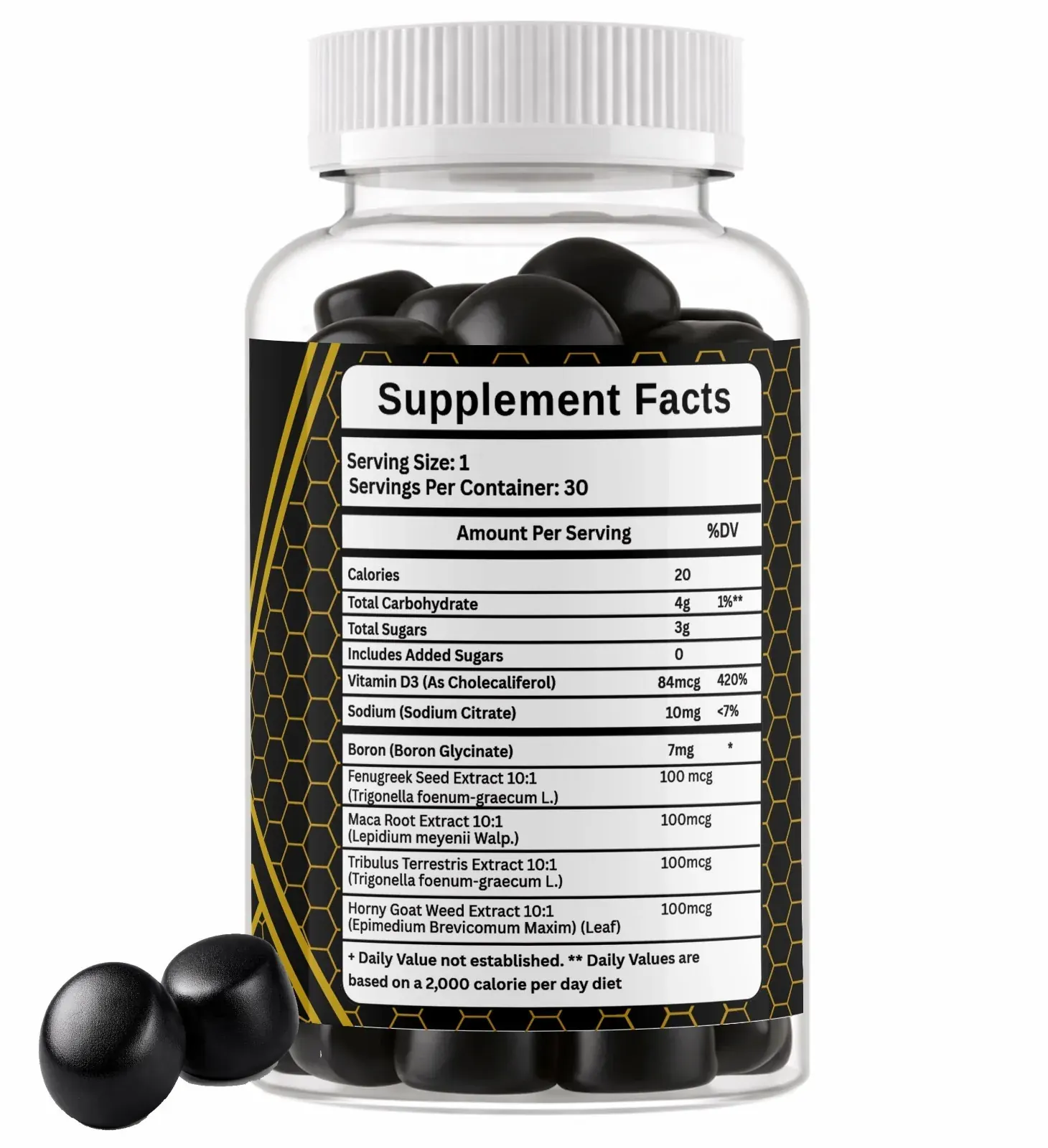
Two of the four botanical rows on this panel carry the wrong Latin name, and both are checkable against the photograph above.
| As printed on the label | What it should be | What went wrong |
|---|
| Tribulus Terrestris Extract 10:1 (Trigonella foenum-graecum L.) | Tribulus terrestris L. | That Latin name belongs to fenugreek, on the row directly above. It looks like a copy-paste. |
|---|
| Horny Goat Weed Extract 10:1 (Epimedium Brevicomum Maxim) | Epimedium brevicornum Maxim. | The letters “rn” have become an “m”, a classic typesetting slip. |
|---|
Botanical names exist because common names are ambiguous. “Horny goat weed” covers several Epimedium species with different icariin content, and the Latin name is how a buyer, a regulator or a laboratory knows which one is in the bottle. Two of the four here do not do that job.
None of this makes the product unsafe, and we are grading a label that prints every amount, which most do not. It is a proofreading failure rather than a safety one, and it belongs on the page because anyone can see it.
Other ingredients and the gummy base
The panel we were given prints no “other ingredients” line at all. A chewable gummy cannot exist without one: it needs a gelling agent, a sweetener, an acid, a colour and a flavour.
That gap has one practical consequence worth naming. The gelling agent in a gummy is usually gelatin, which is animal collagen, or pectin, which comes from fruit. A “vegetarian” badge appears in the seller’s images, and with no ingredient line there is no way for anyone to check it. If that matters to you, ask the desk before you buy.